

During the COVID-19 pandemic, countries took an unprecedented number of health emergency measures at the national and subnational levels to protect health and life. These measures were frequently subject to legal challenges, including on grounds that they violated human rights.
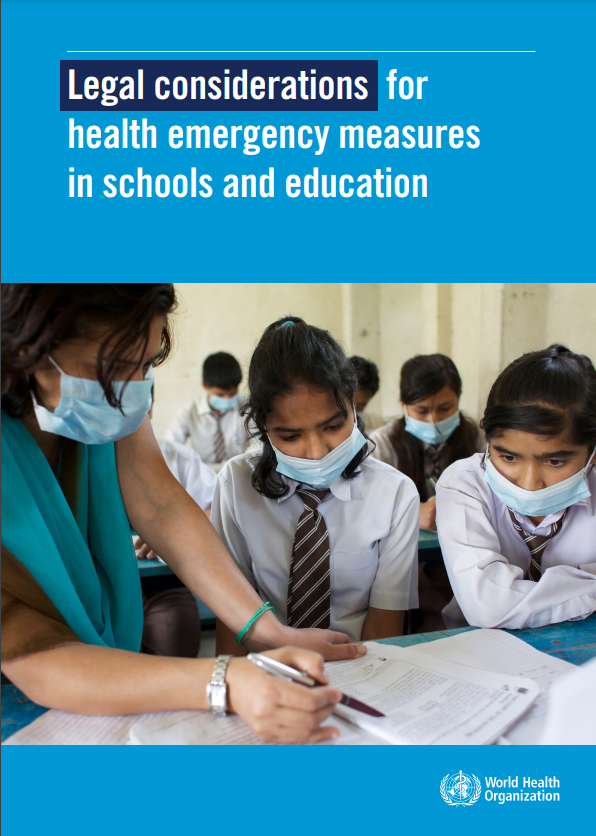
The COVID-19 public health emergency (2020-2023) has been estimated to have disrupted the education of more than 1.5 billion students. Individuals and groups impacted by health emergency measures related to schools and education often challenged such measures in domestic courts. These courts were then called upon to balance the right to health and life against other human rights and interests.
The report describes legal issues that may arise in designing and implementing public health interventions related to education and schools. It is primarily based on national case summaries from around the world contained in the COVID-19 OpenAccess Case Law Database [1]. It is designed to support robust and proportionate public health practice that respects human rights.
Goof Buijs, Manager of the UNESCO Chair ‘Global Health & Education’ and Nicola Gray, Co-Chairholder of the UNESCO Chair ‘Global Health & Education’, University of Huddersfield have provided a technical review of the draft publication.
Read the report: Legal considerations for health emergency measures in schools and education. Geneva: World Health Organization; 2024. Licence: CC BY-NC-SA 3.0 IGO.
[1] COVID-19 Litigation Open-Access Case Law Database [website]. Trento: University of Trento; 2024. (https://www. covid19litigation.org/, accessed 19 January 2024).
