

Source: EuroHealthNet
EuroHealthNet-CHAIN report maps 2014-2024 trends in health, mental health and inequalities in Europe, spurring action on root causes.
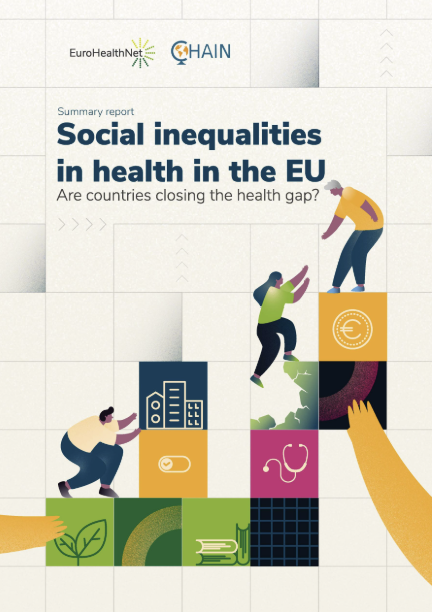
Europeans are living longer than ever, but these gains are not shared equally. Social inequalities in health and mental health persist across Europe, with people with lower education or occupation reporting poorer health. This undermines Europe’s prosperity and threatens its competitiveness and security, as outlined in the EU political guidelines. This is the main conclusion of the new EuroHealthNet and Centre for Health Equity Analytics (CHAIN) report, ‘Social inequalities in health in the EU’.
Using data from the European Social Survey, the report presents trends of social inequalities in health across Europe over the past ten years, highlighting their root causes.
Are countries closing the health gap?
- One in three people reported their health as less than good.
- People with low education are twice as likely to report poor health as those with high education
- Health outcomes are becoming more similar across European countries, but this is a result of countries ‘meeting in the middle’ rather than all countries improving.
- In those countries where inequalities have declined, this seems to reflect worsening health or mental health in higher social groups.
- Only one country (Slovenia) showed progress towards both improving health across all groups and closing gaps in health and mental health.
What drives health inequalities?
Health is not just the result of genetics, healthcare, or our behaviours. It is particularly driven by social disadvantages. The study finds that economic insecurity, limited control over one’s life and job are strongly associated with poor health. Other relevant factors include overweight and obesity, smoking, as well as experiencing financial difficulties in childhood. Problems with housing, which have been increasing in Northern and Western Europe, also contribute to poor health.
Addressing the root causes
Health and its distribution are not only affected by public health policy. Social, employment, and economic policies play a considerable role. Reducing inequalities requires addressing their root causes and integrating a focus on health equity in all these areas.
Upcoming opportunities include the EU Cardiovascular Health Plan, the EU Anti-Poverty Strategy, the European Affordable Housing Plan, and the next EU long-term budget.
