

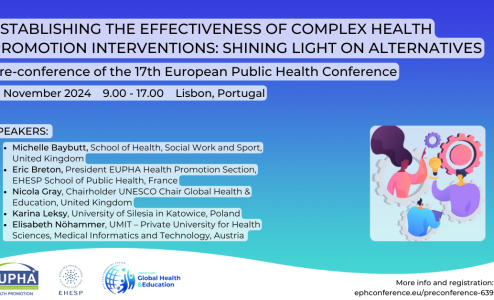
The event “Establishing the effectiveness of complex health promotion interventions: Shining light on alternatives” was held as a pre-conference of the 17th European Public Health Conference on 12 November 2024. The pre-conference was organised by the EUPHA Health Promotion section, in collaboration with the UNESCO Chair on Global Health & Education.
Background
A large share of the programmes and policies developed by field workers to cater to the specific needs of local populations are not amenable to the evaluation methods and designs which are typically ranked at the top of the evidence pyramid and usually seek to study only one factor at a time, all other things being equal. This is a major impediment to the development and improvement of local programmes that are accounting for the specific resources and barriers found locally and that adopt a participatory strategy. In this pre-conference, we will reflect on the challenges facing health promotion practitioners and researchers in establishing the effectiveness of their programmes and policies and will explore alternatives to the traditional epistemological and methodological perspectives.
Through presentations on the epistemological and methodological perspectives driving new evaluative approaches, discussions on real-life experiences, and small-group activities, this interactive preconference will offer a wealth of ideas and knowledge to public health professionals, researchers and policy makers and provide them with opportunities to build collaborations and expand their networks. Materials presented during this pre-conference and the consensus built among the participants will feed into the writing of a statement to be disseminated through the channels and networks of the organisers. This event is building on the Global Handbook of Health Promotion Research initiated by the UNESCO Chair Global Health & Education.
Objectives
At the end of the day, participants will be able to:
- Identify the main epistemological requirements to establishing the effectiveness of a health promotion programme
- Appraise the quality of a research design in establishing the proof of effectiveness
- Define criteria that a programme can achieve to be considered promising
- Develop a multi-layered body of evidence on the effectiveness of a programme.
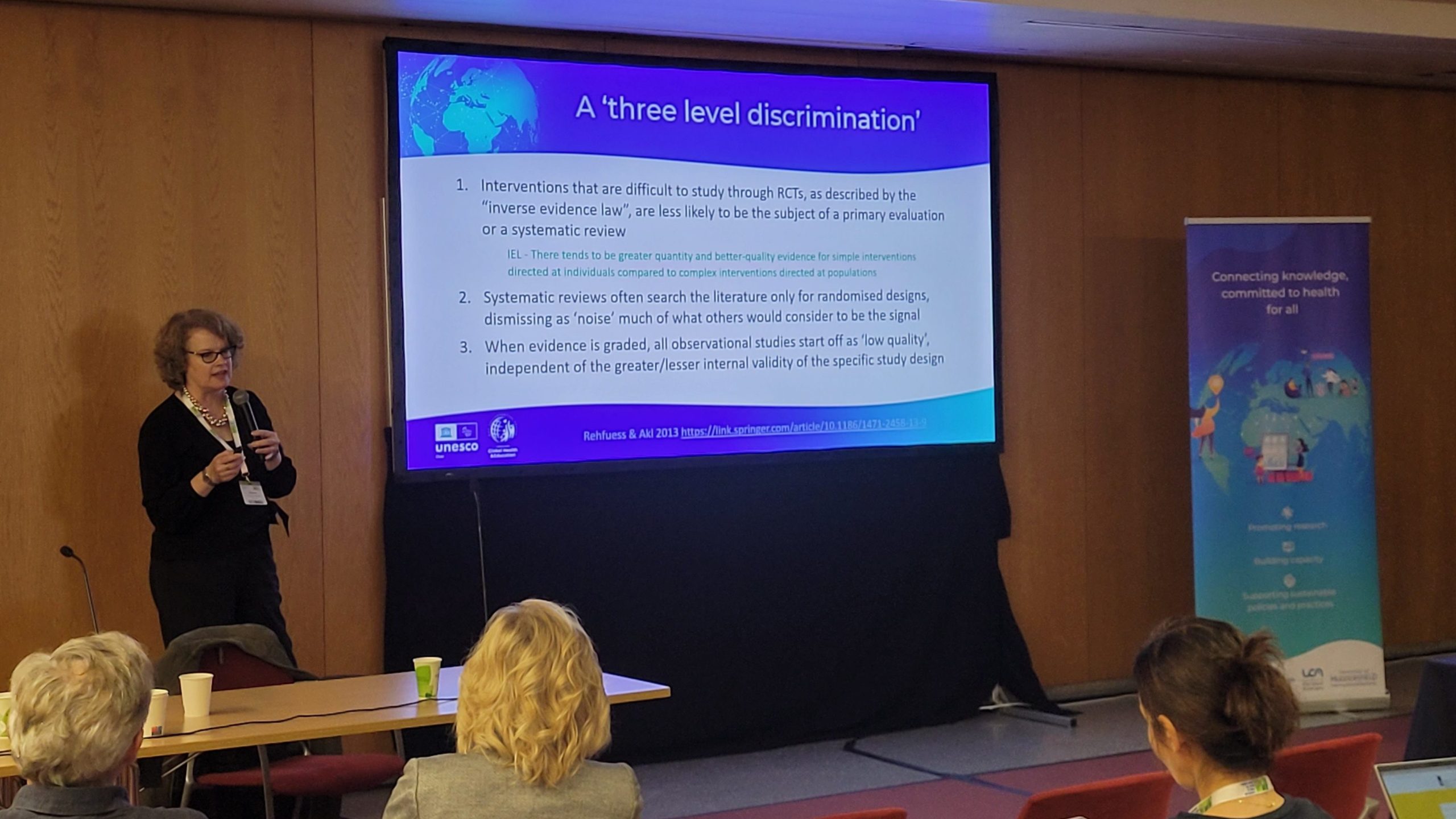
- Argue against views putting RCTs as the only means to make a programme an evidence-based one.
- Identify and mobilise colleagues from the pre-conference able to support them in their evaluation work
- Make their voice count in contributing to a statement.
سخنرانان
The following speakers will be involved in this pre-conference:
- Elisabeth Nöhammer, UMIT – Private University for Health Sciences, Medical Informatics and Technology, Austria
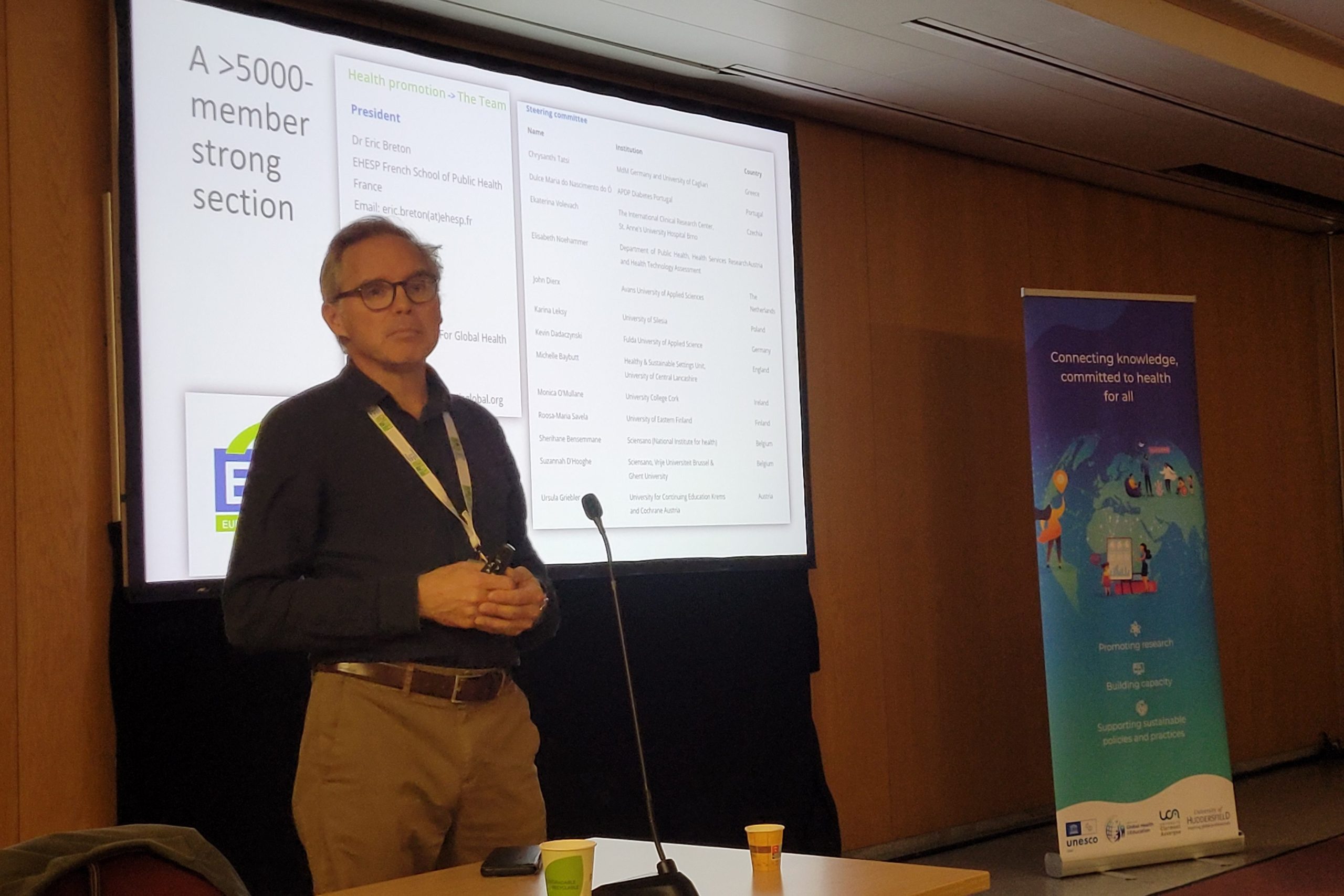
- Eric Breton, President of the EUHPA Health Promotion Section, EHESP School of Public Health, France
- Karina Leksy, Institute of Pedagogy, Faculty of Social Sciences, University of Silesia in Katowice, Poland
- Michelle Baybutt – Professor of Health and Justice, Director of the Healthy and Sustainable Settings Unit, School of Health, Social Work and Sport, United Kingdom
- Nicola Gray, Chairholder UNESCO Chair Global Health & Education, Reader at the University of Huddersfield, United Kingdom
- Silvia de Ruiter, project officer UNESCO Chair Global Health & Education, The Netherlands
Presentations
Download the presentations from:
